 |
|
||||||||||||||
|
||||||||||||||
|
|
|||||||||||||
|
Trade Exchange Articles - Current Year |
||||||||||||||
Current Year |
2010 |
2009 |
2008 |
2007 and before |
||||||||||
This Section Reports On All The News And Happenings Within The Trade Exchange IndustryPlease note: Following this introduction are dozens of excellent articles for you. And we add to them on a regular basis. Trade exchanges, initially known as barter clubs when the concept was introduced 42 years ago, now number over 500 nationally. Although independently operated, their collective client base forms a "business-to-business" network comprised of an estimated 450,000 companies (retailers, services, and manufacturers). When trading through a trade exchange members have the opportunity to make multi-lateral trades…rather than one-on-one trades. Which means many greater options are available to you. That's because when you make a trade with another party within the exchange you do not take their product as a payment, but rather you receive trade dollars. Those trade dollars are deposited by the exchange into your account, and are then available for spending within the exchange. As a member you can spend your trade dollars with others within the exchange whenever you wish to buy their products or services. The trade dollar is equivalent to one cash dollar for use of accounting purposes. Sales are normally made at full retail with a 10% to 15% cash commission paid to the exchange for its services. Under the Tax & Equity Fiscal Responsibility Act of 1982 (TEFRA Act) trade exchanges are classified as third-party record keepers, having the same fiduciary obligations as bankers and stock (securities) brokers. For tax purposes trade dollars are taxable in the year they are "earned" and reported as such on 1099-B forms to the IRS. |
||||||||||||||
Some
of the articles require Adobe Acrobat Reader - Click on logo for free
download of Adobe Acrobat Reader:  |
||||||||||||||
|
Interconnected Barter Relationships Constitute Strong Company Infrastructure Bartercard Wins FCA National Innovation Award For Mobile App Scott Whitmer & Kevin Daly Elected To IRTA Global Board Of Directors Evolution Parallels Between The Telephone And Barter Exchanges West & Busman Partner Up, Creating Equitrade IRTA Suggests Due Diligence On Franchise & License Agreements NATE Announces 29th Annual Convention IRTA Launches New Robust Website For Redesigned Online Experience Attention Trade Exchange Owners � It�s GROW OR GO! Services Costs Keep Increasing ... Another Reason For Using Trade Time For Your Company�s Annual Barter Check-Up! Riggs Reports Record Trading Year For IRTA IRTA�s Universal Currency Sets All-Time Trading Record Barter Newsletter Celebrates 31st Birthday IRTA & New Bartercard International Group Complete Agreement IMS Unveils Third-Quarter Report Powerful, Inexpensive Way To Increase Your Customer Base IMS Barter Adds Colorado Springs Operation ITEX Announces Results For Fiscal Year 2012 IRTA Elects Three International Members To Global Board Awards Unveiled At Annual IRTA Convention IRTA Jamaican Convention Well Attended IRTA Elects New Board President At Jamaican Convention NATE�s Zampatti Announces Ambitious Plans 28th Annual NATE Convention Board & Committee Members Announcement ITEX Corporation Announces Social Media Presence IMS Reports Second Quarter Earnings Trade Exchange Members Demonstrate Creativity IRTA's UC Announces New Stimulus Program for Members Organized Barter Systems Growing To Alleviate Financial Stress ITEX�s 30th Annual Convention Plus Shareholder Meeting Held This Week Seattle IMS Reports Good First Quarter For 2012 IMS Adds New Mobile App Service For Members In-depth Look At U.S. Trade Exchange Industry�s Size ITEX�s Tender-Offer A Big Success IRTA�s Exchange-Deficits Memo Recommends Guidelines For Prudent Deficit Management UC Sets New First-Quarter Trading Record Los Angeles Unified School District Sets Up Barter Program Aussie Group Acquires Global Barter Giant ITEX Tenders Offer To Purchase 1-Million Shares Of Common Stock International Monetary Systems Files Annual Report The Barter Company Welcomes Lynda Trotman As Media Director ITEX Posts Second-Quarter Earnings For Fiscal 2012 Barter Proves Versatile & Valuable IMS Retains DME Capital To Implement Global Investor Program Trade Exchange Clients Should Be Seen As Appreciating Assets ITEX Adopts Cross-Platform For Android & iPhone Applications London Research Study Released The Holiday Season Is Here ... Already! IMS Files Third-Quarter 2011 Report Commercial Barter Industry Faced With Unique Opportunity In Changing Times ITEX Announces Fiscal-Year Results For 2011 Constantinides, Rosinski & Riggs Receive Top Honors At IRTA Convention Three Reasons Why Businesses Fail, And How Barter Can Be A Panacea IMS Launches Franchise Program Overcoming Deficits In The Barter Industry IRTA Announces New, Valuable Member Benefit IMS Acquires Saint Louis-based National Commercial Exchange IMS Files Second Quarter 2011 Report Cruise Lines Provide Economic Benefits NATE Convention Announcement Of Board & Committee Members Creative Renovation Embraces Barter Richard C. Cook Selected As Keynote Speaker For IRTA�s International Convention Green Apple Barter Services Celebrates 20th Anniversary IMS Barter Executive Changes Announced Listening To Your Customers Necessary For Significant Feedback - Part 2 IMS Barter Platinum Sponsor For Upcoming IRTA Convention Listening To Your Customers Necessary For Significant Feedback - Part 1 Astute Entrepreneurs Know That Joining Groupon Is NOT The Way To Go Patent Granted For Barter Trading Technology Advertising Specialties & Premiums Offer 4 Key Strengths IRTA'S PRESIDENT EMERITUS, DAVID WALLACH PASSES AWAY Through Barter You Can Have Your Cake & Eat It Too! Tribute To ITEX Area Director Martin Nobler IRTA�s Ron Whitney Clears Up Barter Confusion With Press Release Wallach Steps Down As IRTA President Timeshare Market Changes Dramatically! NATE�s National Convention Scheduled For June 2, 2011 Marriott To Leave Timeshare Business Bartercard Celebrates Remarkable 20th Anniversary IRTA Global Board Sets Ambitious Goals For 2011 Bolster Your Cashflow By Substituting Cash Buys With Trade Purchases Referrals Drive Business Growth Barter Is One Of The Tools Entrepreneurs Use To Save Money Pricing Mistakes That Many New Entrepreneurs Make USA Today�s Small Business Expert Lauds Barter Over Cash IMS Launches Medical Benefits Program For Small Businesses IRTA�s Universal Currency Establishes New Trading Record Results Reported On ITEX Annual Meeting UC Monthly Trading Record Shattered As It Approaches $900,000 IMS Barter�s Online Sales Hit New Records, Expansion Planned For 2011 ITEX Boosts Cash Dividend By 60% ITEX CEO Steven White�s Annual Message To Its Stockholders IRTA Gains Favorable Opinion On Lawyers Bartering Alan Elkin Addresses Peers With IRTA Keynote Presentation Your USP Sets You Apart From Your Competition BizXchange Expands Into Consumer Barter Arena ITEX Files Impressive 4th Quarter Results Modern Barter Leading Way To Economic Recovery Millionaire Status Highest Among Business-Owners & Entrepreneurs Lasater Reports 24-Percent Growth For TTi Scott Whitmer Barter Hall-Of-Fame 2010 Inductee Build Your Wealth Using Investor-type Services Thru Your Exchange Use Barter For Developing & Distributing Promotional Products Allyson Ames Honored By �Remarkable Women� Awards IMS Completes Second Phase Of Barter Management Software Marketing Expo Sponsorship Provides Excellent Opportunity For American Trade Exchanges New Bank Rule Changes Will Push Barter�s Use Commercial Trade Exchange Industry Receives Favorable Response From European Commission Anaheim�s White House Restaurant Owner Gains Fame Thru Philanthropy Is Your Company Filled With Hunters Or Campers? ITEX Continues Paying Cash Dividend To Shareholders IMS Barter Posts Impressive Gains In Latest Earnings Report UC Hires Barter-Pro Patty Weston As New UC International Broke Mitchell Schultz Now Offering Trips To Outer Space ITA�S Jack Schacht Seeking Alliances Within Barter Industry IRTA Europe�s Chair Eyes New Industry Possibilities Open Letter From Barter21�s Management In Response To Last Week�s Story � Barter Industry Members Astutely Leverage Annual International Congress IRTA�s Opinion Letter To EU To Protect Barter Industry In Europe The Hunt For Capital Is Easier Through Your Trade Exchange Groenwald Enjoying Business Success Once Again New E-Commerce Fundraising Program Triples Nonprofits' Earning Powe How To Start & Grow Your Business With Little Money IRTA International Convention Coming To Pennsylvania Major Barter/Trade Show Planned In Conjunction With IRTA Convention IRTA�s Universal-Currency Trading Record Established Pan-European Trade Network Envisioned Small Business Marketing Expenditures Bartering With Non-Profit Agencies Provides Benefits To Many Attendees Agree NATE�s 26th Convention A Big Success ITEX Reports 2010 Third Quarter Earnings Successful European Assembly & IRTA Meeting Settled Important Issues NATE & IRTA Working Together To Benefit The Barter Industry NATE Holding 26th Annual Convention This Week BizXchange Offers Health-Care Trade Options Paul Suplizio, Secretary To European Assembly & Global Board Director, Reports From Paris CEO White Envisions Widespread Usage Of ITEX Digital Currency ITEX 28th Annual Convention A Blockbuster! CNBC�S �Power Lunch� Had Featured Segment On Barter ITEX Holds 28th Annual Convention European Barter Assembly To Make Historic Decisions Manufacturer Used Barter For Quick Turnaround ITEX Plans Reverse Stock Split To Enhance Company Growth NATE Unveils Seminars For Its National Convention In New Orleans Is It Time For Some Outsourcing Through Your Trade Exchange? Jack Schacht Moves Into New Business Venture Barter Industry Addresses North Carolina Bar Association ITEX Makes Company-Wide Computer Upgrades IMS Reports Most Profitable Year World Barter Federation Plans Meeting In Paris Barter Media Solutions Unveils Multi-Million-Dollar Resort Industry Program Valuable Money Alternative Awaits The Alert Entrepreneur IMS Provides Needed Credit Lines To Business Community ITEX Announces Second Quarter Filing � Fiscal 2010 NATE Convention In New Orleans Slated For Early June Entertain Clients Without Spending Big Bucks Online Barter Exchange Included In Nationwide LGBT Cancer Outreach Lack Of Sales Biggest Problem For Small Business Owners Three Reasons Why Your Trade Exchange Membership Is Valuable Improving Your Trade Exchange�s Bottom Line IMS Barter Adds 22% More Hotels & Resorts - Totaling 752 Your Character Comes Before Software SuperMedia Moves Forward With SuperTradeExchange Network BarterQuest Redeems �Barter Points� For Cash Trade Currency Opportunities Grow Due To Economic Crisis ITEX Announces First Quarter Fiscal 2010 Results Linda Zibell Says Good-Bye After 30 Years Of Dedicated Service IRTA Has Banner Year Exceeding Goals In All Categories ITEX CEO Steven White Reviews 2009 Your Company Is In The Business Of Customer Development! The �Complete Idiot�s Guide To Barter & Trade Exchanges� Hits Bookstores! ITEX Increases Bank Line-Of-Credit To $2,500,000 Kudos To Bartercard New Zealand For Their Accomplishments IMS Barter�s Quarterly Report Reveals Substantial Progress NATE Holds Successful Convention In Las Vegas Gain And Retain More Customers Using Customer Flow Analysis ITEX Reports 38% Increase In New Member Registrations & Cash Flow Operations IRTA 2009 Legends Of Barter Convention An Unqualified Success International Reciprocal Trade Associate - The Next Three Decades The Barter Network Partners With Shriners Hospitals For Children Trade Dollars As Inflation Hedge Slow Growth Of Economy Provides Opportunity For Barter Industry Barter Media Solutions Announces Launch Of $200 Million Economic Stimulus Plan. IRTA Introduces Legends Of Barter Award Barter Exchange Owners Now Have a Solution for Ongoing Professional Sales Training IMS Embraces Web 2.0 Marketing Techniques IRTA Attains Membership Goal Doubling In Past 23 months BizXchange Hailed By Inc. Magazine As One Of Fastest Growing Private Companies In U.S. What�s Scarier...Change Or Extinction? NuBarter�s Renee Miller Answers The Question, "Why should I use barter for advertising?" IMS Re-brands NTA Trade To Become IMS Corporate Barter Money Is the Language of Accountancy Credit Card Industry Changes Provide Terrific Opportunity For Barter Industry IMS Enacts Reverse Stock-Split To Re-energize Stock Top Ten Ways Women Entrepreneurs Boost Productivity More Health Professionals Bartering Their Services Don Mardak, CEO of IMS, IRTA�s 2009 Barter Hall-Of-Fame Inductee IRTA Global Board Participates In Norwegian Festival Kaiser Health News Reports On Bartering for Health Care Build Customerships & Eleven Other Valuable Pieces of Advice IMS Awarded Platinum Sponsorship For IRTA Convention New Tax Breaks For Small-Business Owners Universal Currency�s Offers Are Expanding IMS Annual Meeting Reports On Company�s Moves ITEX Earnings For Third Quarter Fiscal 2009 ITEX Trading Community Expands Into Latin America Rachel Taylor Hooper�s Perspective On NATE Vote IMS Quarterly Report Reveals Cash Flow, Operating Profits Increase Thomas Greco, Alternative Currency Guru, Slated For IRTA Conference Paul Suplizio Keynote Speaker At IRTA�s Historical 30th Annual Convention IRTA-Europe Conference Scheduled For June In Norway Open Letter From IRTA Executive Director Ron Whitney International Monetary Systems Outlines 2008 Highlights Tradia�s Franchise Efforts Expanding Rapidly International Monetary Systems 2008 Annual Report One Person Businesses To Swell In United States TTi/eValues Unveil First Quarter Volume Trade Exchange Signs Up New Vegas Hotel Monetary Expert Tom Greco Pens New Book Todd Bol Back In Barter Industry USA Today Printed IRTA's Letter To The Editor IMS Launches Online Travel-On-Trade Booking Service ITEX Announces 2nd Quarter Earnings & New SaaS Agreement Barter�s Activity Is Impossible To Measure IRTA Sends Letter To USA Today Anxiety Is A Fact Of Life � How You Use It Makes The Difference! Jeff Burkhardt�s Corporate Barter Network Using eValue�s Base For Expansion Bartercard Seeing Many More Big Ticket Items Bartercard Celebrates 18th Birthday Hitting $7 Billion Trading Milestone Scott Bender Stages Earn-Extra-Income Expo NATE�s Executive Director Resigns Sino Fibre & P2P Cash Forge International Barter Platform IRTA Looks Forward After Banner Year 2008 When Your Company Offers To Barter You�re A �Two-Percenter!� Why Each Complaint Can Impact 67 Potential Customers Make Those Needed Improvements Now IRTA Modern Trade & Barter Video Now on UTube Lee & Terry Brandfass To Appear On iTV�s Barter Channel 8 Proven Ways To Becoming A Chosen Supplier TTi Reports 2008 Transactional Volume What�s Happening In Today�s Marketplace...The Use Of Trade Exchanges & Corporate Barter Companies - Part 3 Don Mardak To Appear On iTV Barter Network Tuesday, January 6 What�s Happening In Today�s Marketplace...The Use Of Trade Exchanges & Corporate Barter Companies - Part 2 Futurist Hazel Henderson On Redesigning Money Systems What�s Happening In Today�s Marketplace...The Use Of Trade Exchanges & Corporate Barter Companies - Part 1 ITEX Corporation Announces Fiscal 2009 First-Quarter Results IMS Online Barter Marketplace Product Postings Reach Record Levels TTi Reports $80 Million Trading Volume ITEX Corporation Announces Credit Facility Increase IMS Barter Members Generate Record Numbers At Holiday Expos BarterNews Teams With iTV Network To Air Weekly Barter TV Show Consumers Seek Bargains Rather Than Gift Cards IRTA President David Wallach Takes East Coast Swing When You�re �Paid In Advance� You Are Able To Handle Today�s Dramatic Change She�s Back...Debbie Lombardi Returns To Barter Industry IRTA Moves Headquarters To Portsmouth, Virginia IMS Barter 2008 Celebrity Golf Event Raises $60,000 For Charity Using Trade Exchange�s Services Keeps You In The Public�s Eye Community Currency Prominent At 2008 IRTA Conference Capacity Crowds Expected At IMS Barter Expos For Holiday Gift Buying ITEX Unveils Results For Fiscal Year 2008 IRTA�s 29th Annual Convention Deemed Complete Success IMS Obtains Global Board Seat & Industry Honors At IRTA�s Barter Conference Let�s Make A Deal: Can The Modern Commercial Barter Model Work For Microfinance? IMS Files Second Quarter Report ITEX Expands National Partnership Team Sirri Simsek, CEO Turk Barter, 2008 Barter Hall of Fame Inductee IMS Top Sponsor At IRTA�s Annual Barter Conference ITEX Acquires Media Services Business Marc DiBella Joins National Trade Banc As VP Operations Barter Professionals - Where Are They Now? IMS Acquires Boston-Based Bartermax IRTA Extends Special Invitation To Hall Of Famers Club Med Partners With IMS� Corporate Barter Division NTA Trade First Annual IRTA Video Awards Announced IMS Holds Annual Shareholder Meeting Wallach Offers Definition Of Barter Industry Bartercard New Service Moves Toward Total Business Solution IMS Barter Unveils New Trading Platform ITEX Posts 19% Revenue Increase For Third Quarter 2008 Sino Fibre & Union EPS Sign Agreement Providing Online Barter Processing Services In China The Definition Of An �A� Customer...Cash Or Barter IRTA�s Euro Chapter Marks 10th Year Anniversary ITEX Becomes Sponsor Of NYC Entrepreneurs� Organizatio IMS Unveils Proprietary Barter Commerce Management Software IMS Schedules Annual Shareholder Meeting IMS Posts First Quarter Expansion Results The Key To Profits During A Recession Is Preparation What Your Accountant Should Know About The Business Of Barter ITEX 26th Annual Convention Hits Vegas In High Gea IRTA Europe Meeting Deemed Great Success Barter Company Tradia Goes Green & Sponsors Green Earth Expo BBX Barter Trading Commences In China IMS Expands Empire State Membership With 2,500 Clients Turk Barter Announces Ambitious Plans To Purchase & Remarket 2,500 Home ITEX Exploring Strategic Alternatives ITEX Applauds Midwest Business Exchange Contributions Sino Fibre Completes Strategic Private Placement To Establish Chinese Barter Exchange Green Apple Barter Targets $2 Million In Itex Transactions
International Monetary Systems Receives Equity Investment
TTi Announces Ever-Increasing Online Barter Activity
Solution Selling Key To Barter Industry�s Expansion
IMS Reports Record Year Of Achievement & Growth
New Merger Forms Trade Limited
ITEX�s White Responds to Western Sizzlin�s Unsolicited Tender Offer Changes
Humphreys Proudly Announces New Tradia Web Site
White Compares Barter Industry To Credit Card Industry
Western Sizzlin Discloses ITEX Offer Amendment
TeleTrade int�l Announces Nearly $11 Million In Trade Activity
ITEX Announces Results For Second Quarter 2008
Paradigm Shift For International Reciprocal Trade Association
ITEX Enters �Software As A Service� Market
IMS Enrolls Record Number Of New Clients In January
CPAs Offer Eight Steps Aiding Entrepreneurs In Tough Economic Times
Second Annual NATE Owners-Retreat
Looking Back. . . Do You Remember This February 1982 Announcement?
ITEX Adds 23 Restaurants As Expansion In Chicago Market Continues
Bartercard Launches New Mobile Text Service
Barter Industry Fortunate To Have IRTA�s Whitney Working On Their Behalf
ITEX Moves To Expand Franchise Network, Membership Base
ITEX Corporation Acquires Certain Assets Of Cleveland-Based ATX
Trade Dollars Play Major Role In House Construction
ITEX CEO Likes What He Sees � Buys Part Of Blogging Company
IMS Reveals Increases Across-The-Board For December 2007
Open Letter From IRTA�s Universal Currency Committee
TTI Announces Year-End Trading Activity
The Year In Review And A Look Forward
Trade Exchange Barter Difficult In China
ITEX Sets 25-Year Sales Record On 28-Day Operating Cycle
Personalized Phone Service Beats Automation
ITEX Announces First Quarter Results Of Fiscal 2008
Record Month For International Monetary Systems
ITEX Inland Valley Hosts Holiday Trade Fair
TTi Announces 2007 Trade-Activity Exceeded $100 Million
How Do You Use Your Weird Time?
Entrepreneurs Must Continually Be Alert For Con Artists!
IMS Announces Record Revenue Of $1.4 Million
IMS Third-Quarter Report Reveals Revenue & Cash Flow Increases
IMS Announces Sales Totals & 159% Revenue Increase
Bartercard To Enter India In Early 2008
Update On Third-Party Record Keeping For Barter Exchanges
IMS Plans Nationwide Series Of Holiday Barter Expo�s
IMS Acquires Trade Exchange Serving Kentucky/Tennessee Clients
Current News From International Reciprocal Trade Association
IMS Announces 91% Revenue Increase
IRTA Names New Executive Director
ITEX Reveals Fourth Consecutive Profitable Year
IMS Appoints Former IRTA Executive Director
IMS To Host First Broker/Sales Training Conference
IRTA�s 28th Annual Awards Ceremony
ITEX Holds Successful Regional Conference
Mardak Suggests Consumer Electronics Pro�s Consider Trade Leverage
Additional International Monetary Systems Debt Converted To Equity
IMS Acquires Barter Partners & Kansas Trade Exchange
IMS Announces 106% Revenue Increases
Business Partner Life-Insurance Ensures Safety Net
BizX Honored By Inc. Magazine�s 5,000 Fastest-Growing Companies
Special Corporate Barter Session Added To IRTA Convention
Second Franchisee Acquires Rights To Manage Former Intagio Members
For $500,000 International Monetary Systems Increases Revenue 89%
White Reveals Value Of Intagio Acquisition
Greco Pushing Forth With Establishment, Education Of Mutual Credit Clearing Systems
Aramex Partners With BizX Trading For Trade Exchange Market
TTi Reports 2007 Trade Activity Bartercard International Sells Australian Arm For $25.5 Million ITEX Corporation Completes Intagio Acquisition Art Goehring Selected For IRTA's 2007 Hall-Of-Fame Longtime Exchange Owner Passes International Monetary Systems Trade Volume Increases 104% ITEX Corporation Acquires Intagio ... Adds 2,000 Members IRTA Director Krista Vardabash Announces Departure CEO Don Mardak Interviewed On Audio Podcast ITEX Believes Key To Growth Is Networking ITEX Continues Business Service Expansion International Monetary Systems Triples New Member Sign-ups The Freedom Of Exchange Is The Foundation Of All Freedoms - Part I Noted Industry Veteran Douglas Dagenais Tapped As New ITEX Sales Director BizXchange Opens Dubai International Headquarters IMS Announces Monthly Metrics, Big Revenue Increases New Orleans ITEX Convention Recap ITEX Announces Third Quarter Results For Fiscal 2007 Key Industry Leaders Attend IRTA Brussels Conference Revenue & Cash Flow Both Up For IMS Quarter Selling Futures: Barter Your Future Production or Services Barter Hall-Of-Famer Stephen Webster Joins IMS Board Bartering Comes To Life In Business ITEX Adds Co-branded Master Card To Executive Privileges Program TeleTrade int�l Reports Progress On Different Fronts BBX China�s CEO Visits Australia For Training Bartering Can Increase Our Sales Volume How To Protect Yourself From the Risks Of Bartering IMS Announces 111% Trade Volume Increase For March BarterXchange Appoints Ian Jones CEO Bartering Can Pay Many Business Expenses ITEX Expands Privileges Program, Partners With Expedia For Low Price Travel IMS Annual Report Outlines Achievements, Growth Bartercard Operations Moving Into India National Trade Banc Nets $3 Million Media In White Springs Deal ITEX Announces "Executive Privileges Program" To Address Industry's Biggest Challenge Next Generation Envisions Different Bed & Breakfast Inn Barter Industry Goliaths Report Similar Numbers 142% Increase In Trade Volume For IMS, Gross Revenue & New Clients Also Up Over 100% Second Quarter Shows Operating Income Increase Of 68% Tax Tips For Business Barterers XO Limited Launches Inclusive �Pay Anyone� Software IRTA Board Member Selected For IRS Advisory Group XO Limited Launches Online Database With Free Resources TeleTrade International Trade Volume Up 10% Barterers. . . Use Win-Win Negotiations In All Your Trades ITEX�s White Expects More Vibrant B-2-B Trading Community Lasater Announces Another Growth Period For TTi�s Online Systems ITEX Maintains Consistency Into 4th Year ITEX Pursues Dissemination Of Story Via E-mail �Snapshot� Singapore�s BarterXchange Has Ambitious Plans IMS Does It Again...Acquiring Steve Webster's Alliance Barter Former Trade Exchange Owner Ray Bastarache Scores Again...Turning $50,000 Into $5.2 Million IRTA Sends Formal Invitation To NATE For Unified 2007 Conference TTi Displays Verified Safe� Seal IMS Now Dominates Largest U.S. Barter Market�Greater Chicagoland Wallach Gets Nod For IRTA Hall-Of-Fame Award Hall Of Fame Acceptance Speech Barter Industry Faces Tremendous Challenges IMS Gobbles Up Nation�s Largest Independent Trade Exchange...Schacht & Varner�s NTA/ITA Jack Schacht, Joan Varner Were Heroes To Nascent Barter Industry 2006 IRTA Awards Banquet Presentation Commercial Barter Industry Looks To Emulate Visa Card Model Trade Exchange Contingent Enjoys Annual Convention In Toronto International Monetary Systems Second Quarter Earnings Australia�s BBX Move Into Wine Propitious eBay Seller Teams Up With Bartercard XO Limited Sells Thailand/Vietnam Ozone Franchise License Karen Hoffman Expresses Thanks For Industry Experience IRTA Announces Keynote SpeakerBartercard Stages World�s Largest Trade Show $4 Million Traded In 7 Hours IMS Barter Creates Broker Division For Entrepreneurs ITEX Selects New Orleans For National Convention Bartercard Expands UK Growth With Move Into Ireland Bartercard�s Man In New Zealand, CFO Michael Parsons, Doing Bang-Up Job BBX Expands Into Another Major Field�Wine IMS Announces April Revenue Increase ITEX Has Explosive Quarter...Both Its Income And Revenue TeleTrade International Announces 23% Trade Volume Growth Travel And Entertainment Expenses Can Be Tricky! The Motley Fool Newsletter Looks At Barter ITEX Completes Largest Convention Ever Florida Barter�s Bingman Crowned Broker Of The Year IMS Revenues Up 53%, Operating Profits Advance 144% IRTA Announces New Verifiable Logo Program Mardak Enthused With Hedge Fund Equity Investment Exciting Trip Of A Lifetime Accomplished Through Barter TeleTrade International Hits New Benchmark Flis Heads National Trade Banc Steve Singer Leaves Barter Industry, Buys Budpak, Inc. Persistence Paying Off For Mardak �IRTA U� Theme For 27th Annual International Conference In September Schacht�s ITA Goes Remote To Boost Productivity & Sales IMS Files Annual Report, Acquires More Equity Capital TeleTrade�s First Quarter Trading Volume Up 24%! Vail, Aspen, Steamboat Springs! IMS Expands Again, Acquiring Trade Exchange of the Rockies Barter Happenings Here & There ITEX Reports Transactions, Income, Repurchase Of Shares Largest Independent Trade Exchange In America Introduces Trademart�An Online Barter Shopping Mall Munson Gets Ink With $150,000 Barter Deal IMS Activities Taking Place On Many Fronts BBX Forms Real Estate Fund For Property Acquisitions IRTA Conference Held In Amsterdam Karen Welch Names Her Biggest Competitor BBX Acquires Rival Tradebart Australia TeleTrade Announces Large Trading Volume Increase ITEX Continues Posting Strong Figures IMS Eyes 200+ Monthly Enrollments $2 Million BBX Trade Dollars Used To Purchase $8.3 Million Resort BNI Acquires Credible Competitor�American Barter Network Bartercard�s Global Expansion Continues With Frankfurt Stock Exchange Listing Other Barter Company Happenings Globally ITEX Convention In Las Vegas Could Be Industry�s Largest Bartering Gaining Popularity as U.S. Economy Sputters - PDF Beating The Downturn With Barter Exchanges - PDF Program Developer Steve Webster Teaching Certified Trade Broker (CTB) Seminars Ralf Becker Addressing IRTA Europe Conference Bartercard Sells Turkey License For $600,000 Record Growth Reported By International Monetary Systems National Association of Trade Exchanges Reports Banc Trading Totals eValues Expands Online Technology Services Trade Exchange Industry First...Automobile Fuel On Barter! Ron Whitney�s Unstinting Efforts On Behalf Of U.S. Commercial Barter Industry IRTA 2006 International Conference Slated For Florida BizXchange Lauded By Bay Area Barterers Suplizio Addresses Biggest Challenge Facing Barter Industry Illinois Trade Association Offering New Online Barter Shopping Service To Membership Zampatti Promoting Entire Concert On Barter US Bank Extends ITEX Line-Of-Credit To $1 Million Bartercard Processes More Transactions Than American Express & Diners Club Combined IMS Reports Another $6 Million Trade Volume Month RTE Revs Barter Sales With High End Automotive Marketing Angel Investors Pull Back From Betting On Start-Up Businesses New Universal “Alternative Currency” Backed By Major Corp.’s BarterNews Played Major Role In Olympic Trade With Fortune 100 Corporation Statistics Reinforce Enormous Potential For Commercial Barter Industry BizXchange Earns Certified Trade Exchange Designation By IRTA Australia's BBX Goes Public With Oversubscribed IPO When In Doubt Call Your Broker Like This Happy Entrepreneur Did IRTA Designates Bartercard First Official Certified Trade Exchange BBX Investors Into Real Estate Electronic Barter Network Will Fuel World Economy Two Reasons For Focusing On Your Barter Efforts Ingenious Barter Arrangement Cements Strategic Tie Changes Ahead For Barter Industry As High Tech Marries High Touch Another Cashless Currency Program Introduced "Direct Connect" Model Another Area of Concern For Barter Industry Cooper Suggests Paradigm Shift - PDF Format Success Attitude = (Core Desires + Direction) x Proper Action + Persistence Barterers. . . Use Win-Win Negotiations In All Your Trades! A Look Back - Susan Groenwald - PDF Format International Monetary Systems Aspires To Reach The Mountain Top - PDF Format California Vintner Who Embraced Barter Focus On Excellence - Alliance Barter - PDF Format How The World's Largest Supplier Of Investment Advisory Services Uses Barter Focus On Excellence - A Conversation with Tradecorp's Art Goehring - PDF Format European
Attendance Most Impressive At IRTA Barter Congress - PDF Format Industry's Relentless March Forward Continues In Denver How A Start-up Microbrewery Used Barter No Transaction Fees At Ubarter.com Move Into 2001 With Barter In Your Planning Efforts Industry Icons Come Together To Form BarterNet World's Largest Barter Company NFL Football Hall-of-Famer. Fran Tarkenton Says.... Use Some of Your Trade Dollars To Assist Your Most Valued Customers Your Customers Can Often Be Your Best Advisors! New Tax Law Guarantees More Barter (Stock Transactions) Four Simple Steps Toward Developing Successful Reciprocal Purchases Use Barter (Trade Dollars) To Reward and Motivate Employees Your Company's Team Of Professional Advisors Should Include A Barter Expert Renovation Exchanged For Exclusivity & Advertising When In Doubt Call Your Broker Like This Happy Entrepreneur Does What's Your Barter I.Q.? (Imagination Quotient) Your Trade Exchange Membership Is An Important, Appreciating Business Asset! Three Reasons Why Your Trade Exchange Membership Is So Valuable! Knowing The Critical Function Of Your Business Puts You On The Road To Success Focus Your Marketing Efforts, Cash & Trade, Where They Will Do The Most Good Trace Exchange Perfect Environment For "Friendship Marketing" All Barter Deposits Are Not Taxable Income 10 Ways Barter Can Play An Important Role In The Building Of Your Assets |
||||||||||||||
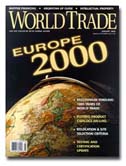 Article
written and published in World Trade, January 2000 edition. Article
written and published in World Trade, January 2000 edition.THE ORIGINAL MEANING OF TRADE MEETS THE FUTURE IN BARTER Simple One-to-One Exchanges Will Give Way to Organized, Computerized, Multi-Lateral Barter The following article was written for World Trade magazine by BarterNews editor Bob Meyer. In late August the world's economic leaders met for an annual policy conference in Jackson Hole, Wyoming. Alan Greenspan was there, as were the heads of the central banks of Britain, Japan, and 26 other countries. One of the attendees, Mervyn King, Deputy Governor of the Bank of England, ruminated on the impact of electronic commerce and the future of money. His conclusion, quoted below, will be startling to some, yet obvious to others--particularly those engaged in the commercial barter industry, which I've been covering for 20 years. "There is no reason products and services could not be swapped directly by consumers and producers through a system of direct exchange--essentially a massive barter economy. "All it requires is some commonly used unit of account (trade dollars) and adequate computing power to make sure all transactions could be settled immediately. "People would pay each other electronically, without the payment being routed through anything that we would currently recognize as a bank. Central banks in their present form would no longer exist--nor would money." International business growth coupled with today's blistering technological change, means it's only a question of time before electronic commerce impacts the role of money, inasmuch as companies of every size look for easier, more efficient ways to facilitate their business efforts. Mr. King's suggestion of electronic barter payments would make international business considerably easier for many, as it would negate today's struggle to acquire sufficient U.S. currency--which is still the unit of exchange in the majority of international transactions. Barter is used because foreign trading partners don't have, or don't want to use, their limited hard currency to buy products and services from the sellers. Unfortunately, today's international mode of bilateral one-to-one barter is very tedious and restrictive. The foreign entity uses the U.S. company to, in effect, become their defacto marketing arm. Additionally, growing nationalism often requires an "offset" component be added to the transaction. The buyer's country dictating, "If we give you this (sale) business opportunity, you will be expected (or required) to bring back business to our country--a percentage of the deal's total value." This could be in the form of pushing tourism toward them, building a factory in their country, or agreeing to make selected purchases for other products and services from the country. Various countertrade mechanism's will evolve as the magnitude of world trade expands. (The World Trade Organization, the U.S. Dept. of Commerce, and The Economist magazine say it accounts for 8% to 10% of the $5 trillion business now done between the countries of the world.) One of the changes will be the introduction of a direct exchange utilizing a unit of account as envisioned by Mr. King. The use of a "trade dollar" as a form of payment offers multi-lateral trading possibilities. Interestingly, it's an alternative already being used by hundreds of thousands of small business owners. And its use is growing, percentage-wise, faster than countertrade. Computer + Trade Dollars = Multi-Lateral Trading Whereas countertrade has always been used by Corporate America, this new form of barter evolved from the small business sector. Known as a trade exchange, it's a proven, effective way to conduct business without the use of cash. Now used worldwide by some 600,000 companies aggregately, it has recently taken on an international bent by increasing its availability from three countries ten years ago to a present 23 countries. This method of trading is more sophisticated and versatile than today's countertrade methods, because it's multi-lateral rather than countertrade's bilateralism. In short, why would one take canned hams as a countertrade payment, which entails remarketing, if one can instead acquire a unit of account (a trade dollar) which can be spent in a variety of ways for needed products and services? A trade dollar is easier, faster, and less expensive to use. How A Trade Exchange Works In 1960, "Mac" McConnell, then a 38-year-old unsatisfied president and principal stockholder of a Los Angeles thrift and loan, devised and developed a debit and credit system for barter which enabled traders to circumvent the cumbersome one-on-one trading. McConnell, who studied accounting at Washington University and later earned a master's degree in econometrics--the statistical application of economics--at the University of Chicago, not only developed a professional accounting system for barter, but more importantly created a credit system that gave it liquidity. The company he started, Business Exchange (known in the industry as BX), is one of the largest exchanges in the U.S. with 20,000 members. Shortly after his successful endeavor others followed, all emulating the McConnell model. There are now over 700 trade exchanges worldwide, with 450 of them located in the United States. A trade exchange is a privately-owned company that provides its members a conduit to other like-minded members, who sell and buy from each other using a trade dollar as a medium of exchange (equivalent to one cash dollar for use of accounting purposes). Each time a member makes a trade purchase, the exchange debits the buyer's account and credits the seller's account with trade dollars. Sales are normally made at the seller's normal pricing structure, whether retailer, wholesaler or liquidator. A cash commission of typically 10% is paid to the exchange for its services. Under the Tax Equity & Fiscal Responsibility Act of 1982 (TEFRA) trade exchanges are classified as third-party record-keepers, having the same fiduciary obligations as bankers and stock (securities) brokers. For tax purposes trade dollars are taxable in the year they are earned, and reported as such on 1099-B forms to the IRS. All members of an exchange get a 1099-B showing their barter sales for the calendar year. Industry Associations Established In 1979, the first of two national trade associations was formed. Known as the International Reciprocal Trade Association (IRTA), its goal in those early days was to bring together trade exchanges to foster the common interests of a fledgling commercial barter industry. Today IRTA members (barter companies) come from as far away as Russia, Iceland, Germany, Chile, Turkey, and Australia. A second association, the Cleveland-based National Association of Trade Exchanges (NATE) came into existence in 1984 and focuses on a domestic agenda for its membership. Universal Currency Established Promoting Global Barter Business It wasn't long after the first IRTA organizational meeting in California twenty years ago that trade exchange owners, newly introduced to one another, began trading among themselves so they could expand the goods and services offered to their respective networks--thereby helping their clients. They did so on a reciprocal basis, owner-to-owner, inasmuch as their trade dollar currencies were inconvertible. However, given the inherent risks in providing extensive credit to one another, the potential for trade between trade exchanges was limited until a way of lessening the liability was created. That occurred in 1996 when a proposal was made by IRTA's chief executive to establish and operate a Universal Currency Clearinghouse (UC). Instead of trading hard product between each other, a currency just for this purpose would be established. IRTA would administer and control the currency. The idea was overwhelmingly approved by the Board of Directors, and the opportunity was immediately at hand to develop a worldwide system which would enable trade exchange owners, regardless of their size or location, to easily trade with one another by using this special currency. Transactions are processed by an automated 24-hour authorization center or via e-mail, with UC monthly trading volume currently at $1 million. Dot.com Companies Enter Barter Arena Within the last year barter on the internet has appeared and promises to take the industry to the next level, as the bartering opportunitiess for various products and services become increasingly global using this new medium. Ubarter.com in Seattle and Melbourne-based BarterExpress.com are expanding rapidly. On the horizon are two other venture-capital backed internet barter companies, which are in the pre-launch stage. Their backing reportedly comes from Kleiner Perkins Caufield & Byers, and Sanford Robertson, as well as Vector Capital. Recently a new market-making service, TradeBanc.com, has been introduced by one of the industry's successful practitioners. Its computerized technology will enable members of trade exchanges to trade directly, online, with members of other trade exchanges--anywhere in the world--as long as their barter company is a TradeBanc affiliate. Every barter company will continue to have their own front-end, operating as they do now. That's because TradeBanc (being the market-maker) is the facilitator or clearinghouse, rather than a third-party record keeper. The new technology will be a valuable adjunct to the commercial barter industry. It promises to catapult international trading efforts forward since the aggregation of all goods and services from all the participating TradeBanc affiliates will be housed in a single database. The tranactions will be cleared by the local exchanges, and settlement will be made using IRTA's Universal Currency. How Your Company Can Benefit Trade exchanges and corporate barter companies facilitate the movement of $10 billion in goods and services annually. Now done almost entirely in their respective domestic markets, as the Universal Currency is still in its infancy. That is changing, however, as members of trade exchanges are finding that trips abroad can be handled through their trade exchanges. I personally know scores of business owners who have taken extensive business trips to Europe and Asia, covering the expenses with trade dollars. Additionally, media around the world is increasingly available for companies who have international needs. For further information on barter companies that are members of IRTA and use the Universal Currency, contact IRTA at (312) 461-0236, or their web site:www.irta.com. Conclusion Mr. King's vision of the future implementation of direct exchanging--becoming an immense barter economy--is plausible, because all the ingredients necessary for attainment are now at hand with today's enormous and ever-growing computer power. The use of trade dollars, as a viable currency or a medium-of-exchange, is four decades old and utilized in millions of transactions. The ubiquitousness of the internet and its infrastructure should/could enable the development of a massive online electronic barter economy, to complement and expand the off-line barter offices now dotted around the globe. Which leaves only one final part of the puzzle to be found--capitalization. Basically, this will require that one or more major corporations grasp in totality the enormous magnitude of creating and ultimately implementing a private, worldwide barter currency. The move in this direction is, admittedly, very fragmented at this time. But the commercial barter industry's evolution is on-going and will continue. Dot.com companies entering the barter arena will speed the movement forward. The question at this time is: How big will the electronic barter economy ultimately become? Given the projections for U.S. business-to-business e-commerce (defined as orders placed between businesses via the internet) which is expected to explode over the next few years reaching $1.3 trillion in 2003, it is not that far a reach to assume that with financial might and manpower, the creation of an efficient, effective mechanism for commerce could be constructed which would allow for the payment and acquisition of goods and services by utilizing one's own products and services. About the author: Bob Meyer, a former major league baseball player, is the founder and publisher of BarterNews magazine, established in 1979. In 1997 he was the third inductee into the IRTA "Barter Hall of Fame." He can be reached at www.barternews.com. |
||||||||||||||
|
BE YOUR OWN BANK [Alternative Currencies] Article by Daniel Evans, XO Limited Inflation proof and interest free money! Interest free loans available to anyone! The end of poverty! Sounds like a pipe-dream doesn�t it? The truth is that the mechanism by which this can be achieved is as old as time and already operates on a small-scale in many places throughout the world. In order to examine how this is possible we must first understand what money is and where it comes from. Money is anything accepted as payment for goods and services by most people in an area at a given time. It is simply a token, a promise that the item of exchange is able to be redeemed for goods and services and, therefore, money can theoretically be anything that people desire to own, not for its direct use, but rather for its value in trading for things that are useful. Until recently the world-wide preference for money has been gold. There are essentially only three types of money: -
Commodity (also known as Resource
or Representative) Money Commodity Backed Currency is money that can be redeemed for gold, silver, or something with a recognized �intrinsic value�. This form of money is effectively an IOU which can be remitted at any time for the product which it represents. It is also very savable as it is virtually impossible to counterfeit (try passing off a fake cow to someone and see if you can make it out of town before the recipient realizes their mistake). In the United States the dollar was defined by the Coinage Act of 1792 as 325.25 grains of silver. This differs from the current US Dollar which now is a fiat currency. Another benefit of commodity backed money is that it does not deteriorate in value however it also has several intrinsic problems. One such problem is that the unit of measure (such as gold) may be limited by the cost of producing it and/or its scarcity. This also represents a catch-22 situation. No one will issue a currency backed by something that is readily available to everyone, yet there needs to be enough of the backing-unit accessible to anticipate growth in the local economy (caused by consumer desire and/or population increase). We are currently seeing a resurgence of commodity backed currencies with the rise of online services such as e-gold (which claims that they will convert your cash deposits into a virtual currency which it backs by gold held in vaults). The downside to these currencies is that any such company having operating costs in excess of revenue may be tempted to borrow against the gold in its reserve. Such a problem may only be realized if there is a �run� on the currency, caused by a lack of belief in the system. The majority of the participants wanting to withdraw their gold will reveal any deficit in the system. In contrast to commodity backed money, Fiat Currency is not representative of any fixed assets or the promise of redemption in some other form. The acceptance of this money is therefore solely dependant on the recipients �belief� that others will also accept and honor the money. In 1971 President Nixon unilaterally resigned from the Bretton Woods Accord. At the heart of the agreement was the guarantee that the US would redeem one ounce of gold for every $35 held by foreign governments. The agreement collapsed because foreign holders of dollars started demanding gold but there were too many dollars in circulation to honor the redemption guarantee. This brought about the rise of fiat currency in the United States, a move which was quickly followed by other countries. The built in flaw is that fiat currencies always keep the total sum of all debt well ahead of the money available to repay it. An example of this is a bank printing and lending out $1000. It then asks the borrower to return the initial $1000 plus interest of $100 in a year�s time � that is 10% interest. The only way in which the borrower can return 1100 of the banks notes is if the bank prints, and lends, $100 more � for which it will again charge interest. A complex system then has to evolve to track the interest charges, print more money, value one currency against another, manage accounts and track the flow of money as it is inter-changed between various governments. The benefit (and downside) of fiat money is that it has no �intrinsic value� and there is no limit as to how much can be created. Another problem is that when people begin to doubt the purchasing power of fiat money, banks fail and the currency collapses. Today, worldwide government debt is in excess of $13 trillion with more dollars owed to financial institutions than there is actually in circulation. As more money is printed and lent out to repay this debt a cyclic problem emerges. If too much money is printed then the currency becomes devalued as the purchasing power is reduced. The precursor of both fiat and commodity backed money was barter, where people engaged in the direct exchange of one type of good for another. Aside from the obvious issue of fair trade (ensuring that the items being swapped both have the same value), barter has other problems such timing restraints and quantity restrictions. If you wish to trade corn for fish you can only do this if corn is in season. If you wish to trade a tonne of corn for a tonne of fish you have to ensure that you need a tonne of fish before you carry out the trade. If the trade takes place now when corn is not readily available, or you are unable to use all of the fish now, then an �IOU� or intermediary resource is needed. When such an intermediary is introduced this becomes the basis of a commodity currency � money backed by a multilateral barter agreement between all participants. Examples of early currency of a similar type appear throughout history:
Each of these items was desirable in their own right and was inter-tradable with other items which the holder of the currency might desire to acquire. One of the (many) stumbling blocks of this type of money is that not everyone in the community may desire the resource which is backing the currency. Furthermore where the price of the commodity is fixed (i.e. an hour of an accountants time in Australia is set at the same rate as an hour of an accountants time in Thailand) the currency is no longer driven by market forces. Exchange rates between various commodity backed currencies do not take into account the entire spectrum of products or services offered by each community as they fix all prices against a single unit of measure. The other major problem is that commodity money is still issued by a central (reserve) banking organization. An end-user cannot create their own gold-backed currency if they are not able to acquire gold (gold not being a resource that everyone can create or come into possession of easily). With the introduction of �barter dollars� as a method of keeping track of multi-lateral barter transactions, restrictions on barter are lifted and trade becomes more readily available. The �wants and needs� of some can then be met by the �wants and needs� of others in the community. There are many advantage of multilateral barter over fiat currency: MEMBERS PAY FOR THINGS THEY NEED IN KIND � Purchases are funded solely through the sale of the buyers own goods or services.
IMPROVED LIQUIDITY OF LOCAL COMMUNITIES � Currency does not have to be brought in from outside of the region. � Unused potential production, or unsold stock, can be purchased by businesses or individuals who have, in turn, the ability to �make� their own money. STABILIZATION OF WILDLY FLUCTUATING GLOBAL ECONOMIC SYSTEMS � The spending and acceptance of �barter dollars� becomes market driven rather than government policy driven. � Sellers are able to set their own international selling price for their product - external to the influence of major foreign currencies. Purchases of the sellers� goods will be based directly on perceived value, rather than on the value imposed through the complexities of foreign exchange. RESOLVES THE ISSUE OF THE SCARCITY OF MONEY � You don�t have to wait for the government or a bank to print and then lend out more money. � No waiting for more gold to be mined and put into the reserve banks vault NEW MONEY IS EASILY GENERATED � Today�s method of earning money is simply a transfer of ownership of printed currency, not the generation of new currency from the labors of the population. INTEREST FREE LOANS CAN BE PROVIDED TO DEVELOPING COMMUNITIES � Regions that have not yet earned �barter dollars� are able to acquire interest free loans which can be repaid through their own efforts. � A use fee is charged to manage these loans and cover any defaults from the group of members. � In a totally closed group little or no defaults can exist as the debtor would have no access to more �barter dollars� until the original balance was repaid through their own goods or services. SOLVES THE ISSUE OF LOCAL SCHOOLS, HOSPITALS, HEALTH SERVICES & SPORTING PROVIDERS ALL COMPETING FOR HARD CASH � Volunteered hours or products/services become �bankable� and therefore tradable for goods or services which are not available from the local donor group NO INFLATION IN THE CURRENCY � Having multi-lateral barter overseen by the central government or bank as a service (and subject to a flat rate use fee) keeps money in circulation as the �fee to use� is generated solely from the labour of those using the currency, not as a result of banks printing more fiat money and causing a decrease in the value of the dollar. Commodity money was introduced to �simplify� the barter process and fiat money was introduced as a solution for the shortcomings found in commodity money however neither can compete against a currency issued by a local community and backed by a pre-determined range of commodities. The bottom line is that when a community has its own multi-barter currency, people have a way of meeting their needs other than first having to earn scarce money. So how do we go about introducing multi-lateral barter at a grass-roots level? The idea of introducing such a system may be daunting however there are many options and many multi-lateral barter systems operating today. Frequent flyer and other reward programs offer the chance to earn �points� or �air-miles� based on your previous spending with their organization and network of affiliates. Points can be redeemed for a variety of goods available through the network. Corporate barter exchanges offer more solutions, with a closed �mutual credit� type currency issued to members and valued against the local �government� sponsored currency. Grass roots currencies such as LETS Dollars or ITHACA/Maddison Hours offer exchanges based primarily on labour but have little or no product content. So what are the steps we can take to have multi-lateral barter more widely accepted: REPLACE MICRO-CREDIT WITH MULT-LATERAL BARTER � Issue �barter dollar� overdrafts to developing communities which can be spent with anyone else in the local community. � Make such �barter micro-loans� interest free and charge either a �per use� or annual/monthly transaction fee for the service. INTRODUCE �TRADE VOLUNTEERISM� INTO LOCAL COMMUNITIES � Trade volunteerism works on the basis of issuing �barter dollars� in return for volunteering within the local community. �Barter dollars� are redeemed by the recipient for the services of other volunteers in the area. � �Barter dollars� can also be redeemed for goods or services donated to the community organization when money is scarce. (Surplus goods are often easier to acquire for charities than hard cash. With a large enough member-base there is almost an infinite market for the goods donated). � Self-worth is realized in local communities as they �earn� their way, get work-experience, or start home businesses on the strength of the local �barter dollar�. HAVE NON-PROFIT ORGANISATIONS JOIN COMMERCIAL BARTER ORGANISATIONS � Encourage non-profit organizations to join commercial barter organizations and have the members donate �barter dollars� in lieu of cash � In commercial exchanges barter dollars are created from businesses surpluses. Once all expenses have been paid the incremental cost to create a dollar in selling unsold inventory or time is minor, so the donors can afford to give more in barter than they can in cash. � Encourage commercial barter organizations to waive cash fees for non-profit enterprises and have the non-profit organizations actively promote the barter exchange in turn. GET COMMERCIAL BARTER EXCHANGES TO INTER-TRADE WITH NON-COMMERCIAL �GRASS ROOTS� ORGANISATIONS � Commercial exchanges often have a large amount of product available - with many of the members wanting to trade surplus stock with one another. Other businesses may use a commercial exchange to �re-market� excess stock outside their normal customer-base to reduce the risk of devaluing their commodity. � Non-Commercial exchanges (such as LETS or Green Dollar Exchanges) often have a large amount of labour available but little in the way of products. As commercial exchanges suffer from a lack of grass-roots items (produce, labour, electricity, accommodation) both exchanges can inter-connect and work towards resolving both their inherent problems. ENCOURAGE DEVELOPING COMMUNITIES TO OPERATE A BARTER-BACKED CURRENCY � Resource rich but cash poor areas are perfect for establishing a barter-backed currency. � Through utilizing a universal barter currency (a currency which can be spent between barter exchanges) an under-developed community can purchase hardware, equipment or expertise from outside their area and repay it through goods or services generated as a result of the new input. � Encourage the community to pay taxes in the new barter-backed currency with the local government utilizing the currency to acquire its goods or services from the local community. HAVE LOCAL BANKS & CREDIT UNIONS OPERATE DUAL �BARTER DOLLAR�/NATIONAL CURRENCY ACCOUNTS � As more �barter dollars� are generated by the local community more wealth is created and, in turn, the system manager (bank/credit union) earns more fees from the new sustainable currency. DE-LINK THE BARTER DOLLAR FROM NATIONAL CURRENCIES � Set a �barter dollar� as an arbitrary unit. Value a range of goods and services against that arbitrary unit so that other members, in turn, can price their own products or services accordingly. There are limited examples of non-currency-linked �barter dollars�. One such system has been in operation since 1934 in Switzerland and still operates to the present day, successfully encouraging trade and local wealth creation between approximately 70,000 participants. Another was developed shortly after World War II by an Austrian city that faced a rapidly devaluing local currency and introduced a local currency backed by a combination of city taxes and government owned businesses. The benefits of establishing a large-scale barter system are numerous. The managers of such a system are able to implement a �service fee� to operate the exchange. As this fee can be spent with any of the members of the exchange (or be billed to members in an external currency such as the US Dollar). The exchange operators can also recover their costs through annual or monthly service levies. Through the combination of �Trade Volunteerism� an exchange may operate in a local community entirely through having a service fee great enough to cover the management costs (paid in the barter currency) that it incurs. Another benefit that an exchange operator faces is that it can act as a �retail� store and facilitator of trade between members. With some members acting as primary producers or wholesalers, and others as direct consumers, the exchange can purchase goods in bulk utilizing �barter dollars� then warehouse, re-price and onward-sell them in smaller units at a profit. Alternatively the exchange can encourage more retail outlets to engage in the community currency to perform this function. Several tools are available for the implementation of a multi-lateral barter-backed currency system. The largest of these is offered by a New Zealand based company called XO Limited (www.barter-software.com) which develops and maintains an entire turn-key banking platform (EFTPOS, Phone Banking, SMS/TXT Banking, Internet Banking and e-commerce all rolled into one system) for alternative currencies, whilst the Dutch non-profit group, Strohalm, has developed a more basic �online only� software product called Cyclos. Both companies offer their products free of charge to non-profit organizations - with XO recouping its costs by levying a small transaction fee of half a percent of the value of each transaction to �fee charging� exchanges. (The fee charging exchange typically charges their own members anything from 3% to 5% of transaction, thus enabling them to make a healthy profit.) XO also recovers its development costs in offering turn-key �Ozone Barter� barter exchange franchises starting at $5,000 USD each. About XO Limited Founded in 2002, XO is the worlds largest developer of barter, counter-trade and alternative currency systems. The company offers a neutral Internet based platform that enables traders to trade with one another using "virtual" and community barter currencies through electronic and traditional means. XO�s systems are designed to enable currency issuers and barter operators to reduce their costs whilst increasing their overall trade volumes. Some of the key functionalities of their trading platform includes: a universal currency, Internet banking, TXT/SMS banking, internet trading (buy and sell online), IVR (telephone) banking, EFTPOS (electronic point of sale) cards and direct interfaces with traditional banking methods. Additionally, the XO software systems are written to enable the barter exchange operator direct access to their customer base via the Internet, with data able to be accessed and downloaded into common Microsoft and third party applications. The company has the largest team of software developers specializing in barter exchange and alternate currency systems anywhere in the world. About Ozone Barter Ozone Barter is a franchise brand of XO Limited with offices in South Africa, Singapore, Australia and New Zealand. It is also the only Australian and New Zealand Company to operate a 24 hour/7 day a week trading call-centre for its members. Established in December 2003 by XO Limited, Ozone has experienced rapid growth with a membership base exceeding 5,000 businesses. Ozone�s home page address on the World Wide Web is http://www.ozonebarter.com. Ozone barter franchises are available world-wide starting at $10,000 USD for a country license. Contact Details for Article Press release prepared by XO Limited. For hardcopy of the press release and further enquiries, please do not hesitate to contact: Daniel
Evans How The World's Largest Supplier Of Investment Advisory Services Uses Barter This is the
third in a series of candid interviews "Direct From The Street"
that we are publishing in 1996. The prominent traders we talk to are
actively and seriously using barter in their company's day-to-day
operations. We expect they will be shooting straight from the hip—telling
it like it is. BarterNews looks forward to sharing their insights,
opinions, attitudes and experiences with you.
Wein: Our product is bingo card and display advertising. We also barter the mailing lists (of prospects) of financial investors. BarterNews: What's bingo card advertising? Wein: It's a bingo-type postcard with 40 to 50 advertisers, which we place in some 80 postcard decks every month. The combined monthly circulation of these decks is over 8 million. There's about 1,000 different card decks published today, but we focus our efforts in three areas: financially-oriented decks, business card decks and computer owners. We charge the advertiser who wants to use our bingo card service 45¢ per inquiry. And we'll trade that out, taking trade dollars as payment, or in some cases the advertiser's product or service on a direct trade basis. We represent some other print media, because we acquire advertising space in selected publications, where we'll trade display space. And we also trade our financial lists and sales leads to the financial community on barter. (People who would buy these lists would be stock brokers or insurance people looking for sales leads with phone numbers.) BarterNews: Do you find that you do more trading on a direct basis with various principals and parties, or more through trade exchanges? Wein: We don't usually go out of our way to make barter arrangements with our regular customers, since they represent the cash side of our business. Our barter business is done through trade exchanges. And we're a member of seven different exchanges because of the new business they bring us. BarterNews: How were you introduced to barter? Wein: I had joined Business Exchange International (BXI) in California, but I was disappointed because they just didn't have much here on the east coast. Then a few years later Dan Weston called me, he was beginning a franchise in New York City for BXI, and I became his first client. He had that area for five or six years and then he started another company, Central Corporate Reporting Service, which was an investor's relations firm. I remember this because they went public the exact same day BXI went public in the early '80s, and they even raised the same amount of money—$3 million I believe. BarterNews: What's the dollar amount of your average trade? Wein: A few hundred dollars. Although we've had some biggies, like the $50,000 trade with a collection agency. They obtained mailing lists from us for different areas of the country where they were opening up new offices. We were paid with trade dollars from three different exchanges. Another big one was with a publicly traded corporation—a stamp collecting company. They were looking for financial sales leads, and they also paid us (approximately $30,000) in trade dollars. BarterNews: Where do you spend your trade dollars? Wein: Advertising is one desirable area, because we advertise heavily in the financial press. And on occasion trade exchanges will have a financial magazine as a client. Whenever possible, we'll take two page spreads. That can gobble up $7,000 to $15,000 for a single placement. Second to advertising would be printing. Usually smaller jobs for internal operations. These would be runs of 5,000 to 10,000 pieces for ourselves or publishers we represent. We haven't found a printer who would accept 100% trade on our big print runs of 350,000 to 500,000 pieces, normally it's part-cash part-trade on these bigger deals. BarterNews: Have you ever worked with any corporate barter companies for media? Wein: I'm not sure what you mean by corporate barter companies. We currently work with BPTX, BXI, Barter Advantage, National Commerce Exchange, American Barter Exchange, ITEX and Global Trade. BarterNews: I was referring to the corporate barter companies which normally specialize in media. They're larger companies like our cover advertisers in BarterNews. Wein: No, I've never worked with any of them. That's interesting that they have media, I'll have to investigate more into this end of the business. BarterNews: Do you trade at all with your regular vendors? Wein: I've had a few arrangements that are open ended accounts, such as messenger services. But I haven't done much of this type of trading. BarterNews: What's the biggest change you've seen in your 22 years of barter? Wein: There's more trade exchanges around today. They're bigger, more professional, and a lot more truthful than when I started. Of course there are more goods and services available as a result, but I was always amazed at the number of things I could get, even years ago. BarterNews: What changes, if any, would you like to see within the trade exchanges you're working with? Wein: I'd like to see more cooperation among them. Incidentally, that's another change I've seen over the years. But they're still hotly competitive. I'd like to see less competition and more cooperation. I think they'd benefit more, as well as their clients. If this were to occur I'd join more exchanges. Because each trade exchange is an avenue for additional sales-business I normally wouldn't get on my own. So if the trade dollars were more uniformly valuable I'd simply join more firms, since I'd have more sales people selling my services and products. I think such cooperation, which transposes into greater spendability, would give the industry a real "shot in the arm." BarterNews: Any other ideas on what would increase trade? Wein: Some type of insurance for the trade dollar itself would be of significant help. In other words, if the client of a trade exchange could be assured that the trade dollars earned would always have spendability within the industry, even if the exchange they belonged to went out of business, that would be a major step. Hopefully, it'll happen someday. I think everyone would profit from it. BarterNews: So the most valuable aspect of barter, for you, is additional sales? Wein: Yes. There are two values that barter, through trade exchanges, brings to me. One is that each exchange has its own group of "hot" prospects, with trade dollars they want to spend. Every one of those clients, therefore, is a potential buyer of my service. Second, they have a sales force that, hopefully, contacts the client base and informs them of my services. So the more exchanges I join, the more overall trade dollars I'll earn. BarterNews: The trade exchanges you mentioned are quite regional. Do you work with trade exchanges out of your area? Wein: BPTX is out of Massachusetts, se veral hundred miles away. That started when one of my children was attending the University of Vermont, and I thought I could use the trade there. Their trade dollars, however, are of value to me despite the fact that they're out of state, because they have some excellent printing services. So an exchange can be located anywhere, really. BarterNews: But you aren't working with any exchanges outside the east coast? Wein: There's definitely an advantage to working with ones in close proximity. But I'd join outside firms if they were big and it made sense for me to do so. BarterNews: Do you ever trade for items to retrade or resell? Wein: Through my bingo postcard promotions I've often done direct trades with advertisers who will pay me with their product. These are items I couldn't possibly use myself, so I trade the stuff into the trade exchange. Same thing with advertising, I may sell mailing lists to a publisher and take back ad space in their publication. In fact, I do that with several gambling and lottery magazines. Overall I may do 15% to 20% of my barter in this manner. The vast majority is done through trade exchanges, however. BarterNews: What percentage of your overall business is done on trade? Wein: We typically do about $70,000 a year in barter out of an annual gross revenue of $4 million. It's certainly not a large percentage—but it's fun, and it's business I normally wouldn't get. Plus, I see it as almost all net dollars to me. BarterNews: What do you see as the ultimate upside potential of your trading? Wein: You've mentioned areas that I've not explored, such as working with a corporate barter firm. ITEX has approached me regarding their corporate barter division, but we haven't consummated anything yet. However, I do have about $80,000 in advertising space to sell. BarterNews: So you could do considerably more than you're now doing? Wein: I could, I could. BarterNews: How much time do you spend on your bartering activities? Wein: Incidentally, you've put your finger on one of the problems with barter, regarding my firm. I can't give the barter to the sales people who work for me. They're working for cash. BarterNews: How about perks and incentives? Wein: I give them many incentives, all on barter-things like restaurants, Broadway shows, and vacations. Actually I use a lot of the barter for the sales force. But they're not interested in selling for trade dollars, as they do very well selling for actual dollars. So I end up doing the barter deals. And that's a minor problem, in that I talk with the trade exchange clients and many of the deals are quite small-under $500. It's time-consuming for me, but I like to do it. BarterNews: What advice would you give a newcomer to barter, someone looking to work with a trade exchange the first time? Wein: I'd encourage anyone to get involved in barter, and tell them it is very helpful in generating sales they'd normally never get on their own. The sales I've generated, although small in relationship to our overall sales volume, nevertheless are almost all profit in our case. When my company was much smaller barter was more significant for us, but it's still important enough that I handle it personally. And it represents $70,000 additional net income for the company that I wouldn't want to part with. BarterNews: When you consider "signing on" with a new trade exchange, how do you determine if they're a good one to work with? Wein: I normally give them a list of items I'm seeking, ones a good exchange would have. If they don't have anything I need I wouldn't join. But if they have printers, restaurants, copywriters, et cetera, then I'd ask for several referrals among those vendors—and if they're "real," I'd join. BarterNews: What's the reputation of barter within your industry? Wein: My major business is the investment advisory field, and in that area they don't know anything about the barter business. They don't trade at all, to my knowledge. In the mailing list field, there's a lot of trading (of lists). But again, many investment advisory firms will not even sell their customer lists to anybody, much less a competitor. However, they might consider exchanging a list with a competitor! So barter is used extensively in list exchanging, where valuable customer names are traded for other valuable customer names. Also, as the price for mailing lists goes up, and they have over the years, there is more of a need to trade. When I started 30 years ago, mailing lists rented for $15 to $20 per thousand names. Today the low end of the range is $90 per thousand, and many lists rent for $500 to $600 per thousand. The same names with addresses and phone numbers are sold for, on the low end, 25¢ per name on up to $5 per name. We can perform on both ends of the spectrum. BarterNews: What is barter's biggest drawback? Wein: To me it's the possibility of a barter firm going out of business and the client being stuck with a lot of unspent trade dollars. Over the years I've been trading that's happened to me several times, at least seven or eight times. As a result of my experience, the only way I operate is to spend the trade dollars as I earn them. In this manner I eliminate the possibility of getting stuck. BarterNews: What do you see as the future for barter? Wein: I think the future is excellent for barter firms, because they're providing a valued service for the business community. I have great faith and belief in the U.S. and its free-market economy. Those who have done exceedingly well are the entrepreneurs who have ridden the economic wave. So as our economy grows, and business increases, I think the barter firms will do better and better since they provide a great marketing tool. As far as capitalization is concerned, barter is a tremendously exciting concept. Even though the commercial barter industry is very young, I've known of several barter firms that have gone public. They're not all still in existence, but they raised millions of dollars because the barter financial concept is very enticing! Furthermore, over the years I've seen an enormous change in barter's respectability in the marketplace. The IRS recognizes it now as a legitimate business. That means two things in my mind. There's a government authority that recognizes this industry, and secondly, because of this "legitimacy," there's more business people who will view it positively and want to become involved. They won't view it as some subversive underground movement anymore. And as more people and companies get involved, we'll see a greater number and amount of available products and services—which means that those trade dollars will become more valuable, too. Taken together, the future of barter looks like a "can't miss" situation to me. No Transaction Fees At Ubarter.com Subscription-based Model Introduced As White Believes Transaction Fees Regressive By Bob Meyer, Editor In the autumn of 1996, Steven White phoned colleague and friend, Alan Zimmelman, who had recently sold his trade exchange and moved to San Diego. White told Zimmelman that "52" was way too young to retire, and pitched him on the idea of consolidating the barter industry...with the ultimate intent to take his new company, International Barter Corporation, public. Even though consolidation was a new concept in the barter industry, Zimmelman liked the idea. That November, International Barter Corp was formed with six employees: Alan Zimmelman, Dick Mayer, Barbara Ryan-Galpin, Stacy Lawrence, Patra Model, and Steve White. Big dreams, small staff, lots of energy, little capital, and with a nondescript office near Sea-Tac airport—the company was launched. IBC's first transaction would be to purchase Cascade Trade Association, the company White founded in 1983. IBC raised $150,000 from a group of 63 individuals, spending a little over one year to get the company listed on the entry-level board of the Nasdaq. The listing date was February 11, 1998, with the stock trading at $1.00. A 1997 BarterNews cover story mapped out White's plans to consolidate the barter industry. The strategy was to create a centralized brain-center where trade managers from around the country could access all the products and services from one database. Since IBC already had Cascade's several hundred business clients bartering off-line, they determined their first stab at the Internet would be geared toward the consumer. Because eBay was gaining popularity, they thought consumers would jump at the concept. Ryan-Galpin, who started with the company in 1994, was the web master; White was in charge of the flow chart and business model. The programming and database building were farmed out. After working nine months on the site, and watching their stock run from $1 to $14, the site was launched in July of 1998. Everyone was exceptionally nervous, not knowing if the marketplace was ready, or if the site would "scale." According to White, it was a disaster! The site was unable to handle more than a couple dozen people at one time, and immediately crashed. The platform that the site was built on would not scale, and the programming company eventually went out of business. The business model was flawed, as well. With no currency in circulation, users were unable to complete a transaction. The site was closed within the first week, and their stock plummeted to $2. They were back to the drawing board, with the company facing extinction. White said he considered many times jumping out the window. And would have, "but," he recalled, "since we were only on the second floor it was obvious the jump would not kill me—but only increase my pain!" When three of the original investors asked what the company's plans were, White told them it was clear that the Internet was the place to be. Yet IBC should stick to what it knew best: business-to-business sales with a unique currency. Five days later the investors sent White three checks totaling $1 million dollars and said "go to work." The company changed its name to Ubarter.com believing if they built a first class, easy to use site that had free registration, free listings, and free browsing, users would give it a try. Now that they were re-capitalized, it was time to fill in the holes of the organization. White approached Dan Schneider, who had continually updated Cascade's computer network during the previous ten years. White asked him if he would consider leaving his very secure job of fifteen years, 401k plan, benefits, nice office and prestige, for a 25% pay cut and no guarantees to help build this vision. Schneider said he would. Rob Benson, who had worked for White in the late '80s and early '90s, was next on the list. White asked him to leave his steady job and accept a pay cut. Benson knew the culture at the company, which was "we will die before failing." (In the early '90s Benson and White actually lived in the office at the Grosvenor House in Seattle in order to keep their expenses to a minimum while they built the business.) White also contacted Kevin Andersen who agreed to significantly wind down his CPA practice in order to become Ubarter's CFO. Dick Mayer, who started with the company in 1996 along with Benson and Stacy, made certain the company generated revenue in the business-to-business off-line environment. Schneider, Ryan-Galpin, and White got busy mapping out the future and interviewing dozens of potential builders for their new site. Mindcorps of Seattle was chosen for the development of phase two in December 1998. Schneider and White logged thousands of hours, working on minute details as they debated endlessly with others on hundreds of particulars regarding the site's functionality. Three months later, Ubarter completed their only acquisition—one of the largest trade exchanges in Canada—utilizing its client base to add more products for the site, plus giving them true international currency recognition. By September 1999, the new web site version was launched--the first time barter was ever seen online. Ubarter.com successfully pioneered this space on the Internet. "It was up to us to turn this first-mover advantage to winning the space--to be like E*trade or eBay," White related. "We instituted a new distribution channel in a brand new market." Of course, that required that they maintain, expand, and market the site. Plus it would take additional funding, since they were (once again) almost out of money. To add to their hurdles, Amazon.com had acquired Mindcorps. This meant Ubarter had to find a new e-commerce company, to build the next version of their site and continue to add functionality to the existing one. After months of searching and another round of interviews, the company decided on AXC Interactive to build phase three. As a gesture of their faith, AXC agreed to accept part of the initial payment in stock, as well as to accept Ubarter dollars for the sublease of their office space for six months. In early December, investment bankers from Network Commerce became interested in learning about the Ubarter story. They liked what they heard, and thereafter arranged a meeting for White with Dwayne Walker, CEO. Ubarter signed a letter of intent several days later, and Network Commerce wired $2 million to their account—to pay bills and keep phase three moving forward. At the time Ubarter was running on empty, with $411 in the bank. Network Commerce subsequently acquired AXC, placing all development in-house. Looking back, White smiled in remembrance. "Our business model is unique," he affirmed. "I can only imagine what our present potential is, with the strength of 400+ employees and access to the full Network Commerce team!" As we move into 2001, we begin our interview by asking White how he likes his new position. . . BarterNews: How does it feel to be heading a subsidiary of a much larger company, versus wearing an entrepreneurial hat, as you did for so many years? White: It feels great, because the hardest part, for all of us who grew up in this industry, was wearing so many hats—all the time. It was extremely difficult to grow one's business beyond a certain point. Not having to worry about raising capital, or making payroll at the end of the week is a real relief. And being able to go to fellow employees who are much smarter than I, in many areas, is a plus as well. Network Commerce is very entrepreneurial. Each division or subsidiary has full responsibility to grow their business and utilize the infrastructure and resources at their disposal. BarterNews: How much of your time, as CEO of Ubarter.com, was spent on tasks other than the barter business? White: In 1999, our last months as a closely held company, I spent close to 75% of my time on public filings and trying to raise capital. A public entity is very cumbersome and expensive. Prior to going into it, I had no idea the depth of effort needed to go public. If I had known how difficult the road would be, I probably would never have made the jump. I think that's true about many things though�if people always knew what to expect from new endeavors, they might not go for it. BarterNews: So if you're not spending time chasing down money or making payroll, what does Steve White, Senior V.P. of Network Commerce, do these days? White: It's my job to operate and grow the Ubarter division, making it profitable by building the customer base, and increasing the liquidity within our system by expanding the amount of currency in circulation. My goal is to achieve $1 billion trade dollars in circulation at Ubarter. Of course, managing the employees and keeping them all focused is also part of my job, along with fully integrating the division into the overall business objectives of Network Commerce. BarterNews: What is the amount of currency in circulation at the present time? White: Around $10 million, so our work is certainly cut out for us. We have to make the Ubarter dollar valuable and secure enough that we can make Ubarter loans, knowing it will come back to us and be spent within the system. BarterNews: But you have an unusual asset in the ability to work with the other Network Commerce subsidiaries. Shouldn't they be able to assist you in reaching your goal much faster? White: You bet. With over one million businesses on the Network Commerce Business Network, if we get 10% conversion to Ubarter and issue each business a $10,000 credit line we would immediately surpass our goal. It's really all about building a critical mass and using the legs that Network Commerce has--a firm of 400 employees, with a strong balance sheet. We definitely will be a survivor and trader within the internet space. BarterNews: How are things progressing now that you've been on the job six months in your present capacity with Network Commerce? White: The challenge we've faced since July was to fully integrate Ubarter into the Network Commerce family and technology. And we have accomplished that. Integration is a very difficult thing to do when a merger occurs because there's different software, human resources, agreements, as well as various business cultures. Going into 2001, I see two challenges. How do we gain more client companies for our marketplace? And then, how do we motivate them to initiate more transactions? We want to show not only value to the customer, which barter will do, but increased value by allowing our customers access to the entire Network Commerce suite of services. BarterNews: What are your plans toward this end? White: We're adopting a completely new business model. BarterNews: Really. White: It's a subscription-based model, where Ubarter clients will pay a flat $25 cash fee each month. There will be no transaction fees, which is unheard of in the barter industry. Of our current 30,000 clients, we expect to convert 10,000 over to the subscription model. And our goal is 40,000 clients by the end of 2001. BarterNews: Under this business model it appears Ubarter would not have to be as concerned about trading activity. White: That's right, with no transaction fees the customer has every incentive to trade. Plus, an additional benefit is that it eliminates our collection problem, as every client will be on automatic payment—using a credit card or bank draft. Actually, we think this new business model will begin to break down, and ultimately replace, the current 3-fold barter model now in existence with monthly fees, cash transaction fees, and ancillary charges--such as travel booking and annual renewal fees. In fact, one of our new markets will be clients of other trade exchanges. Because if they are trading $250 or more monthly, they will appreciate the value of our new model with less fees. Our thinking is this: If a client needs personalized service, then sure, it makes sense to charge the 8% to 10% cash transaction fees. But just to do a transaction, no. It's smarter to go to Ubarter. We anticipate savvy clients will get their regular trading partners to join them in opening Ubarter accounts, which only cost $25 a month. Part of the problem, as I see it, of getting people to trade is the barrier of high-service fees. It has become obvious to us that the marketplace never really accepted paying a cash transaction fee. Transaction fees are regressive, they actually penalize the companies who create the liquidity in our barter economies. Even stock brokerage houses have gone to a flat fee, not a percentage of the deal. As the barter industry evolves, the 10% to 15% transaction fees will have to significantly decrease. Ubarter is now attacking and eliminating this barrier for our own clients. BarterNews: This is quite an unexpected announcement. Are there any others? White: Yes. We plan to provide full disclosure of our barter economy to our clients and the marketplace. We will file a "white paper" with the American Institute of Certified Public Accountants, the Better Business Bureau, chambers of commerce, as well as internet agencies. BarterNews: What do you mean by full disclosure? White: Our intention is to disclose the number of clients within our system, the number of positive balance accounts, and the number of negative balance accounts. We presently have a balanced system between the positive and negative accounts in the U.S., and expect to achieve an overall balanced system in the foreseeable future. I know of no other exchange that can make this statement. It seems exchange owners are constantly arguing and debating this subject of deficit spending, and oftentimes they don't even know what their deficits are! BarterNews: How does an exchange determine its deficit? White: A deficit is found by totaling all the positive client accounts, and subtracting all the negative client accounts—excluding house accounts and inventory. Ubarter believes its clients should know the health of our exchange, because there is a definite risk for them when an exchange has a sizeable deficit. The rating system we will create is based on an exchange's deficit, and is intended to help our industry's credibility. BarterNews: There have been some remarkable changes in the barter industry since our issue #42 interview, back in 1997. The last time we talked you were intent upon making industry acquisitions, which never materialized as you envisioned. Why do you think your efforts in this area fell short? White: We were ahead of our time. I believe I educated the marketplace, encouraging everyone to think about it. The next guy then came along and executed that business model. In retrospect, I'm glad they're doing it and not me. BarterNews: That's it? You just were too early? White: Basically, yes. Exchange owners weren't ready for the idea. With the passage of two years and Ubarter being acquired, plus a couple of other well-funded companies hitting the market…well, it's all just come together. Remember, Ubarter pioneered in two areas, as published three years ago in BarterNews. The first was our consolidation plan, and second we were the first to move into the online environment. Now everybody realizes that an online presence is necessary. BarterNews: But most exchanges are not "purists" as you are, they don't believe online is the only way to go. White: They overlook the fact that a pure online exchange, like Ubarter, can still enable a client to purchase things off-line (in person), at member establishments using their Ubarter.com card. An online company allows clients to search and buy online at their own convenience, unlike the off-line where they're dependent upon their trade broker's schedule. Let me add that, in a fast moving industry like ours, one of the keys to survival when you try something that doesn't work, is to figure out why. And then you must adapt and refine the business model, which is what we did--and will continue to do. From our perspective, off-line is just not as profitable...there are employee costs, leases for each office, local area networks (LANS), traveling costs from office to office, making sure everyone is in sync, and keeping everyone in the loop. What did stay in our original model was the commitment to centralized brainpower and operations. It's also beneficial as we now, effectively, have customers in two dozen online markets. BarterNews: How will you leverage the assets of Network Commerce? White: With Network Commerce as a base we have significant inventory already, from the 1,025,000 businesses on their Business Network. We anticipate our sales for fiscal 2000 will be more than $100 million. And don't forget, Network Commerce has affinity with others (internet sites) in the marketplace. Additionally, scores of Network Commerce vendors are accepting Ubarter trade dollars when selling to us. My big hot button, when I initially talked with Network Commerce about the acquisition, was the strength of their business model. They had invested $200 million in their technology, with over 100 people servicing this department. Consequently, Ubarter will never have to worry about having a top of the line e-commerce site. Nor will we ever have to search for a web vendor again. BarterNews: I would think that is especially difficult in the technological area, where you have to rely upon others. Select the wrong people and you're in trouble. White: Exactly. If you'll remember, the speech I gave at NATE in 1999 had that exact message. No one should try to build his or her own e-commerce barter site. It's just not worth the loss of time as well as money. If you want to get an e-commerce strategy, I highly recommend partnering up with somebody...rather than trying to build your own. Ubarter made that error back in 1997. We threw our first site away after nine months worth of work. If we had waited until years later, you and I wouldn't even be talking today. So thank God it happened early on. We lost about $100,000, which was a lot of money for us at the time. It didn't cripple us--although it was a close call. We're into the 3.0 model now, with a very powerful search engine. We can offer immediate online transactions, just like E*trade or Charles Schwab. When one buys a hotel room, for instance, trade dollars are moved from the purchaser's account to the seller's account--immediately. Plus the history of a client's purchases and sales, all the items they've listed past and present, will be on the site. We're trying to offer the barter community the best availability in products and services. There is no registration cost, and no cost to list items. Additionally, sellers are able to remove their products or services at any time. For example, a hotel could list availabilities one month, take the hotel off the market the next, and put it back on at a later date. It's very easy to facilitate. One of the big differences in our operations today, versus when we had an off-line company, is that we no longer push the information to our members between 9 a.m. and 5 p.m. On the Internet we do it a different way. The clients decide when they want the information, on their time, at their convenience. BarterNews: How do you stay in front of your client base? White: We broadcast e-mail every week. Over half our staff is involved with customer service, enabling Ubarter to grow from 3,000 members at the end of 1999 to 30,000 at the end of 2000. And the upgrades never stop. We've already completely integrated our sister properties—FreeMerchant, ShopNow, and B2B—at Network Commerce. Since they're all using Oracle platforms, when a person at any of those sites registers, all the information provided will go to Ubarter when they hit a single button. It's selective registration, like the new Microsoft Network which aims to have all information available in one place on the Internet. BarterNews: In retrospect, what do you suggest as the best way to go public, for a privately held barter company? White: There's a couple of ways to go. One way is to be acquired, another is to initiate an IPO. I've made the suggestion that half-a-dozen of the guys in the industry could band together and go public. In such a scenario one person would be named CEO, another the CFO and that would be the focus of their jobs. The problem is egos get in the way, and in some cases people might not "fit" comfortably in the new corporation. BarterNews: Do you see this happening? White: I don't think so, partly because of the greed factor. I read an article in the Harvard Business Review about VC funded companies going IPO, it said that within two years the average founder ended up with 7% of the firm. So at IPO you have to question if you're willing to give up 93% of the company...and a lot of control. BarterNews: What percentage did you have of Ubarter after two years? White: Twenty-seven percent. That's the big reason why my early attempts at consolidation didn't work out. The trade exchange owners wanted too much for their barter companies, plus they didn't understand the dynamics of getting stock for their company—like they do now. They're definitely better educated today. BarterNews: So is the day of the entrepreneur going into the barter business about gone? White: They can earn a living at it, but they won't get rich. The old model, where there is a two or three person office in a local community, will still be around. And their focus would be on servicing a very local clientele. BarterNews: Could these types of operations plug in with a company such as yours? White: They could and they should. Everyone needs an e-commerce strategy of some sort, and it would be wise to partner with an e-commerce site. BarterNews: Let's look down the road a couple of years. What do you see? White: Today there are seven companies I can name that have 10,000 or more clients. In one year I see only three of them surviving, and by the end of the following year it'll be down to two. I also anticipate transaction fees will be greatly reduced or eliminated. BarterNews: What about the two trade associations, IRTA and NATE? White: I expect they'll remain about the same. The local exchanges need a voice and the interaction of annual industry meetings; plus the associations also act as a quasi-training facility. I also think the two currencies (IRTA's Universal Currency and NATE's Banc) will continue to be useful to the trade exchanges for reciprocal trading. BarterNews: Do you see any big changes coming, or is it more of an evolution? After all, no one envisioned a few years ago all the money coming into the industry from Wall Street�or a barter company being sold for $45 million. White: I see big changes coming. I believe our new subscription-based model will enable us to grow to one million customers having, ultimately, a billion Ubarter currency in circulation. And the reason that's a possibility is technology has made it easier for businesses to communicate. Easier for Ubarter's customers to find the liquidity that they desire for their products and services. Add to that the fact that new pricing models, which didn't exist five years ago, are now becoming commonplace. BarterNews: What does this mean for the barter business? White: Companies are beginning to understand that there are various ways of purchasing a product, other than walking into a store and writing a check or using one's credit card. BarterNews: So you're saying our industry is going to introduce a new payment option. One that really has been around for 40 years? White: It may have been around for four decades, but it's never been totally accepted. What's happening for the consumer is that they now understand various pricing models and payment options. Most importantly, a mental shift has taken place. After all, our industry enables the business community to stretch their dollars, adding value by enhancing life styles and expanding their business. And think about it, that's really all we are—our secondary currency is a different payment option. The day it's totally accepted we will see our industry grow dramatically.
|
||||||||||||||
about us |
about b meyer |
from the desk of
|
contact us |
issues |
back issues |
consulting services |
entrepreneurs package |
Competitve Edge |
FastStart |
order |
classified advertising |
affiliates |
banner ads |
first time visitors |
travel section |
media section |
trade exchange
section |
corporate barter section |
countertrade section |
secondary capital
section |
real estate section |
trade exchange news 2006 |
trade exchange news 2005 |
marketplace |
community barter section |
restaurant & entertainment
section |
USA barter companies |
global barter companies |
trade exchange owners |
sponsors |
tuesday report
| 2011 Tuesday Reports
| 2010 Tuesday Reports
| 2009 Tuesday Reports |
2008 Tuesday Reports |
2007 Tuesday Reports |
2006 Tuesday Reports |
2005 Tuesday Reports |
2004 Tuesday Reports |
2003 Tuesday Reports |
2002 Tuesday Reports |
2001 Tuesday Reports |
2000 Tuesday Reports |
1999 Tuesday Reports
|
||||||||||||||